New Faculty Spotlight: Nan Xu
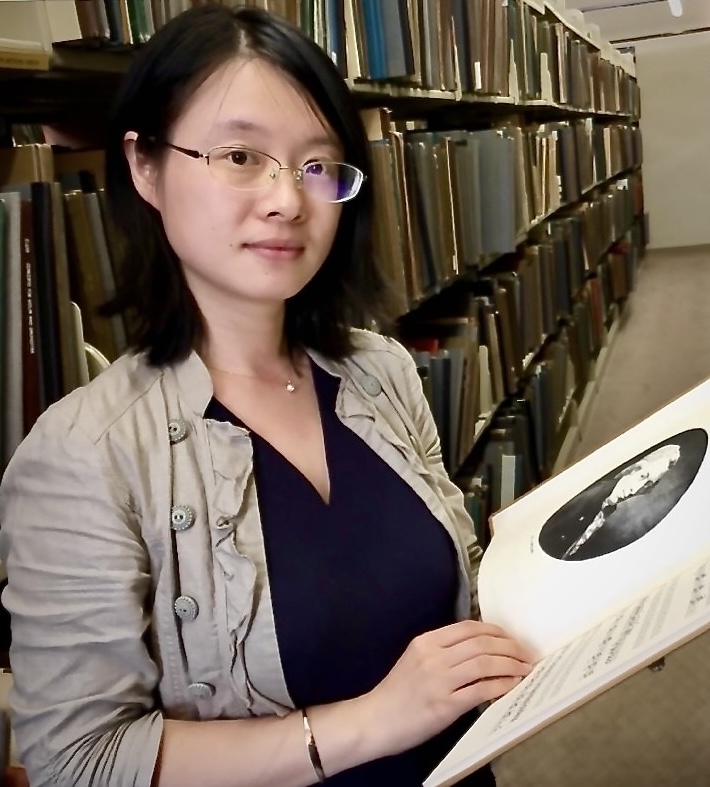
Dr. Nan Xu was recently welcomed to The University of Maryland (UMD) as an Assistant Professor in the Fischell Department of Bioengineering (BIOE). Xu also holds affiliations with the Department of Electrical & Computer Engineering, the Neuroscience & Cognitive Science Program, the Applied Mathematics & Statistics, and the Scientific Computation Program. Xu leads the Imaging- and Neuro-computations for Precision Informatics Research (INSPIRE) Lab, which operates at the intersection of data science and brain science. Her lab focuses on developing computational models that decode patterns in brain activity and disease mechanisms, using neuroimaging data such as fMRI-BOLD, local field potentials, optical imaging, and MEG from both animal models and human populations.
Xu earned her Ph.D. in Electrical and Computer Engineering from Cornell University with minors in Applied Mathematics and Cognitive Neuroscience. Her academic foundation includes dual bachelor's degrees in Electrical and Computer Engineering and Mathematics from the University of Rochester. Xu’s interdisciplinary training continued through postdoctoral appointments in Chemical and Biomolecular Engineering at Georgia Tech, biomedical engineering at Georgia Tech and Emory University, and as a visiting scientist at MIT’s McGovern Institute for Brain Research. “When searching for a faculty position, I was looking for an institution that embodies strength across these diverse disciplines. UMD stood out as an ideal fit, with strong engineering, theoretical, and computational foundations, a vibrant local brain research community, growing ties to medical research, and a focus on collaborative science, essential for fostering interdisciplinary innovation.” Her integrative research approach has led to significant recognition, including a K99/R00 Pathway to Independence Award from the NIH BRAIN Initiative. This award supports her current work on advanced statistical and machine learning approaches to analyze dynamic brain networks and understand the mechanisms underlying cognitive function and dysfunction. Xu’s research has been presented at leading neuroscience conferences and published in high-impact journals, with contributions spanning network neuroscience, functional brain dynamics, and 3D image reconstruction for biomedical applications. She has also developed tools like QPPLab, a software package for analyzing large-scale quasiperiodic spatiotemporal brain patterns, reflecting her commitment to creating accessible research infrastructure. “The Fischell Department of Bioengineering, in particular, has impressed me with its supportive and collegial atmosphere, a place where I truly feel a sense of warmth and belonging,” Nan says. “Although I am the first neuro-engineer in the department, the faculty have been incredibly welcoming of my research and vision.” At UMD, the INSPIRE Lab will pursue a systems-level understanding of brain activity through computational modeling and neuroimaging analytics. By integrating approaches from electrical engineering, neuroscience, and applied mathematics, Xu aims to contribute to both foundational science and translational research in neurological health.
Related Articles: May 2, 2025 Prev Next |
|