UMD Student Bridging Research Innovation and Education Advocacy
University of Maryland (UMD) Clark School of Engineering PhD student Sydney Overton is helping advance the university’s research while supporting her fellow graduate students. A fourth-year electrical engineering PhD student, Overton also works as a research graduate assistant. She contributes to the work being done in the Clark School’s MEMS Sensors and Actuators Laboratory (MSAL), a space dedicated to creating miniaturized biomedical devices. Currently, the team is focused on developing ingestible capsules to address a myriad of gastrointestinal (GI) tract issues. Overton is currently working toward a device that can autonomously monitor levels of serotonin in the GI tract so clinicians can better understand the connections between brain health and gut health. The chemical plays a key role in body functions such as mood, sleep, and digestion. Too much can lead to symptoms like confusion, restlessness, and diarrhea; too little can lead to mood disorders as well as sleep and digestive problems. “This is really a first-of-its-kind device that can be used in studies that involve observing how people’s health changes over time,” Overton said. “This is crucial to understanding how and why changes in gut health correspond to changes in brain health.” Overton takes a systems engineering approach, fabricating microscale features into her serotonin sensor then integrating them with milli-scale technologies into a single miniaturized platform. The Clark School MATRIX Lab has many of the key technologies Overton uses in her work. She’s used the 3D printing capabilities to create the individual components in my device, including some of the serotonin sensors. As she moves her device toward autonomous operation, the MATRIX Lab will provide the tools and processes she needs to create testing rigs and perform characterizations. The lab’s Director of Remote Sensing and Microsystems, Dr. Justin Stine, provides mentorship and guidance for the microelectronics part of her research. Overton also supports the lab by helping Stine develop the Advanced Manufacturing Lab course that will be offered at the MATRIX Lab in Spring 2026.
Outside of work, Overton volunteers as a student advocate within UMD and the University System of Maryland as a whole. Through her work with the ECE Graduate Student Association, she hosts social events and brings in alumni panelists with the goal of enhancing the experience of ECE grads. She is also involved with the Engineering Senate, focusing on how to best serve all engineering graduate students throughout their programs. She also serves as the Vice President of Financial Affairs for UMD’s Graduate Student Government. While Overton finishes her PhD and wraps up her time at UMD, she is exploring her options for opportunities after graduation. “Over the course of my PhD, I've gained a sincere appreciation for mentoring and teaching, so I would love to find a position where I can work with students, whether that be a faculty position at a university or an instructor role,” Overton said.
Related Articles: October 21, 2025 Prev Next |


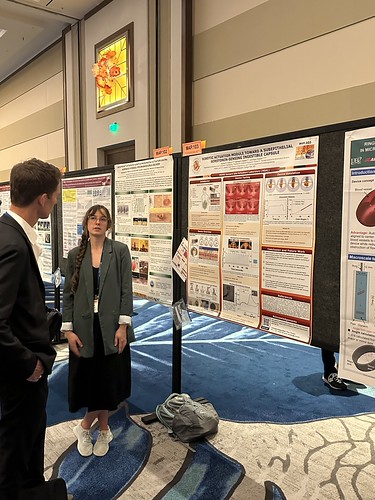
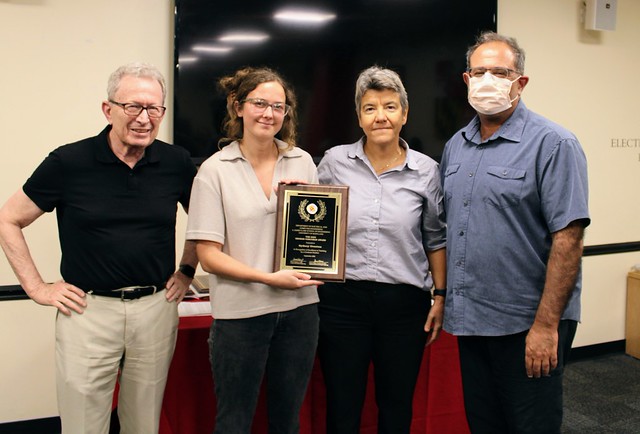 Overton has received several honors for her work with the University. She has been recognized for her exceptional service and outstanding contributions to the Department of Electrical & Computer Engineering (ECE) and the University as a whole [David Bader Graduate Student Service Award (2025), Outstanding Graduate Assistant Award (2024)]. She has also received awards for her teaching [George Corcoran Memorial Award for a Graduate Student (2023)] and for her research [Clark Doctoral Fellows Mid-Career Award (2024)]. During her time at UMD she has earned two fellowship positions, one designed to prepare engineering and computer science PhD students for careers in academia (Future Faculty Fellow), and one designed to foster cross-disciplinary exchange and collaboration in microbiome research (Center of Excellence in Microbiome Sciences Summer Research Fellowship).